
Podcasting has never been more competitive, or more rewarding. The number of podcast listeners worldwide reached 619.2 million in 2026, showing a 6.83% year-over-year increase. With audience numbers climbing steadily, your microphone is no longer optional gear; it is the first impression your show makes. If your audio sounds amateurish, listeners leave before your first ad break. Edison Research's 2025 Infinite Dial report found that 68% of U.S. podcast listeners abandon episodes within the first 90 seconds if audio quality feels amateurish or tinny. That single stat should inform every purchasing decision you make.
The good news is that finding the right microphone has never been simpler, provided you match the mic to your situation rather than chasing the priciest option on the shelf. This guide covers the seven best podcast microphones across every price point, from under AU$100 to professional broadcast-grade kit, so you can make a confident choice and start recording.
Use the table below to identify your starting point in under 60 seconds. Match your situation to the right category, then jump straight to that review.
| Microphone | Best For | Connection | Effort Level | Budget (approx. AUD) |
|---|---|---|---|---|
| PodNest Studios setup (Shure SM7B) | Professionals wanting studio-grade sound | XLR | Low (staff operate it) | Studio hire |
| Samson Q2U | First-time podcasters on a tight budget | USB + XLR | Low | ~$90 |
| Rode PodMic USB | Beginners wanting room to grow | USB + XLR | Low | ~$290 |
| Shure MV7+ | Intermediate creators needing versatility | USB + XLR | Low-Medium | ~$420 |
| Audio-Technica AT2020 | Treated-room podcasters on a mid budget | XLR | Medium | ~$160 |
| Blue Yeti | Multi-guest or interview formats | USB | Low | ~$200 |
| Electro-Voice RE20 | Professional broadcast-quality vocals | XLR | High | ~$680 |
Start here based on your situation:
Best for: Podcasters who want broadcast-grade audio without building their own studio
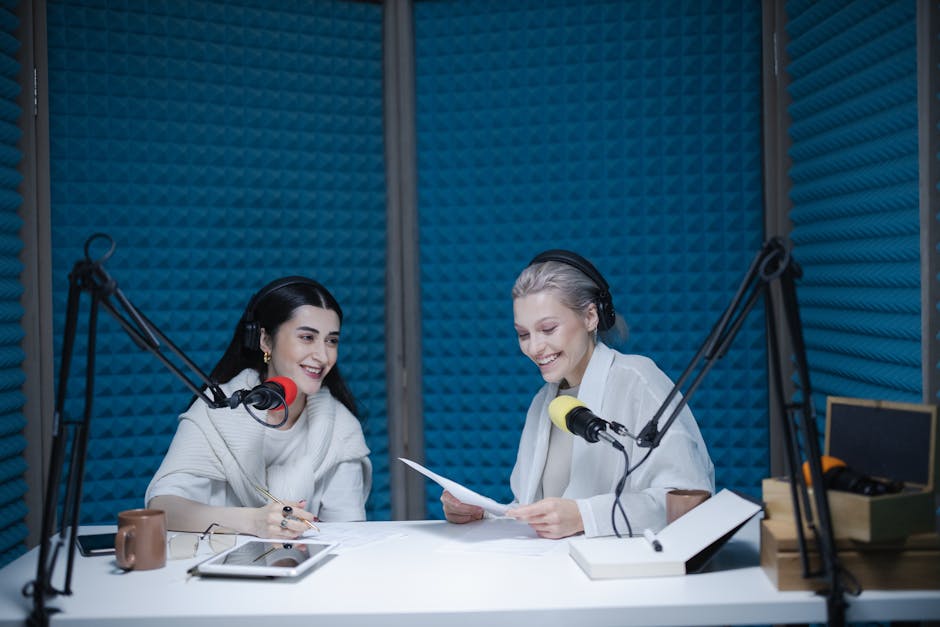
When the best podcast microphone is the one set up by a professional in a purpose-built, acoustically treated room, your first call should be PodNest Studios. Located inside the Kindred Studios creative complex in Yarraville, Melbourne, PodNest is situated inside a vibrant creative complex, and from the moment you walk in, you are immersed in a relaxed, professional atmosphere built for creativity, with a café, bar, and a thriving artistic community all around you.
I have found, working with audio setups across multiple environments, that the single biggest variable in vocal quality is room acoustics, not the microphone itself. An SM7B in an untreated spare room will sound worse than a mid-range dynamic in a properly deadened studio. PodNest solves this problem immediately. You simply pick the type of recording you need and add the services that take your podcast to the next level, walk in, get comfortable, focus on your content, and they will take care of the rest.
The studio uses industry-standard Shure SM7B microphones, the same XLR broadcast-quality dynamic that has become the gold standard across professional podcast studios. The SM7B dynamic microphone has a smooth, flat, wide-range frequency response appropriate for music and speech in professional audio applications, and features excellent shielding against electromagnetic hum generated by computer monitors, neon lights, and other electrical devices.
Pros:
Cons:
Pro Tip: If you are launching a new podcast and want your first episodes to sound polished enough to attract subscribers and sponsors from day one, booking a professional studio like PodNest is far more cost-effective than spending $700+ on your own home studio gear, which will still sound inferior without acoustic treatment.
Best for: First-time podcasters who need a reliable, versatile mic without breaking the bank
The Samson Q2U is the best value in microphones. Every podcast equipment guide recommends it for a reason; it works, it sounds good, and it costs less than dinner for two. At around AU$90, it offers dual USB and XLR connectivity, meaning you can start recording straight away on USB and then plug into an audio interface later when you are ready to upgrade. The Samson Q2U is a budget-friendly dynamic microphone with USB and XLR connectivity, delivering great sound quality and noise rejection. Its versatility makes it ideal for both beginners and experienced podcasters.
In my experience, the Q2U is the mic I recommend without hesitation to anyone who is still deciding whether podcasting is the right pursuit for them. The dynamic capsule handles untreated rooms well, the build quality is solid for the price, and you will not need to replace it the moment you outgrow the USB setup.
Despite its classification as a budget podcast microphone, the Samson Q2U boasts an impressive frequency range between 50Hz and 15kHz. Combined with a -54dBV/Pa sensitivity level, it is less likely to pick up unwanted background noise than some of its more expensive competitors. If the Q2U was ranked eighth in a 2024 podcast gear survey despite its entry-level price, that speaks volumes about real-world user loyalty.
Pros:
Cons:
Best for: Podcasters who want professional sound now with room to grow later
The Rode PodMic USB earns its price with a genuinely broadcast-grade dynamic capsule, more on-board processing than anything else in its class, and a build quality that feels like it belongs in a professional studio rather than a consumer electronics box. At $199, it is the most complete single-device podcast microphone available at this price.
The defining feature here is dual connectivity. The Rode PodMic USB's dual USB-C and XLR connectivity fundamentally changes the upgrade path for podcasters, start with USB plug-and-play simplicity, then transition to XLR when you invest in an audio interface. Under the hood, you are getting a high-power neodymium dynamic capsule with a cardioid polar pattern. The frequency response spans 20Hz to 20kHz, sensitivity sits at -57dB, and it handles up to 148dB SPL, more than enough for any vocal application.
The built-in APHEX DSP processing, normally found only in studio rack gear, gives your voice warmth and clarity straight out of the box, which means your recordings sound broadcast-ready without post-production tweaking. If you are building a home studio on a reasonable budget, this is the mic that earns its keep for years.
Pros:
Cons:
Best for: Intermediate podcasters and streamers who want premium features in one package
The Shure MV7+ strikes a beautiful balance between beginner-friendly and professional, thanks to its dual USB and XLR connectivity, and has some nice touches like a customisable LED touch panel that lights up. The Cloudlifter CL-1 uses phantom power from your interface to add 25 dB of clean gain before the signal reaches the interface, ensuring you get great sound without introducing noise.
What sets the MV7+ apart from its predecessor is that the built-in preamp solves one of the biggest frustrations with professional-grade dynamics, the need for a powerful external interface or a Cloudlifter to drive adequate gain. If you have ever wanted an SM7B-style sound without the SM7B-style setup complexity, the MV7+ is the answer.
According to The Shure MV7+ strikes a beautiful, the MV7+ is their top overall recommendation for podcasters, praised particularly for its combination of beginner accessibility and professional headroom.
Pros:
Cons:
Best for: Podcasters recording in a quiet, treated space who want detailed, natural vocal capture
Dynamic mics like the Samson Q2U or Rode PodMic work better in untreated rooms because they reject background noise. Condenser mics like the Audio-Technica AT2020 sound more detailed but pick up every sound in the room. That caveat is important, if your recording space has hard walls, traffic noise, or air conditioning hum, a condenser will amplify every flaw.
In a treated room, however, the AT2020 genuinely shines. Through even a basic interface the AT2020 sounds more open and natural. In blind tests with five podcast listeners, four picked the AT2020 as sounding more professional. Priced at around AU$160 for the XLR version, it requires an interface like the Focusrite Scarlett Solo (roughly AU$130), bringing the total to around AU$290, comparable to the PodMic USB but with arguably more natural vocal reproduction in ideal conditions.
Pros:
Cons:
Pro Tip: If you own an AT2020 and your recordings sound roomy or thin, the problem is almost certainly your recording environment rather than the microphone. Try recording inside a wardrobe filled with clothing; it is a surprisingly effective acoustic treatment that costs nothing.
Best for: Podcasters who record multiple guests in the same room and need polar pattern flexibility
The AT2020 and Blue Yeti both excel but serve different purposes. The Blue Yeti offers four polar patterns (cardioid, omni, bidirectional, stereo) and Blue VO!CE software integration, making it more versatile for content creators. The bidirectional mode, which captures audio from both sides of the mic, is particularly useful for two-person interviews with a single microphone.
I have found that for solo podcasters in 2026, the Blue Yeti's condenser design can be a liability. The Blue Yeti earned its legendary status and the four polar patterns still offer unmatched flexibility at this price tier. But in 2026, its condenser design is a liability for the majority of home creators who lack acoustic treatment. If you have a treated room or a purpose-built studio environment, however, the Yeti remains a strong, accessible choice at around AU$200.
Pros:
Cons:
Best for: Seasoned podcasters, broadcasters, and voice-over artists who demand the highest vocal fidelity
The Electro-Voice RE20 is designed for broadcasting and you will find it in many professional radio studios. This dynamic mic sells for approximately $449 USD, and it boasts highly accurate sound reproduction. The key differentiator is EV's proprietary Variable-D technology. The RE20 delivers exceptional sound quality, and its Variable-D design minimises proximity effect, ensuring consistent and clear audio even when moving around.
According to The Pro Audio Files' RE20 review, the RE20 "became a favourite for broadcast applications" shortly after its introduction and has remained the gold standard for spoken-word recording for decades. The flat, neutral frequency response is a deliberate choice; it captures your voice as it actually sounds, rather than adding the bass-boost colouration that some competing dynamics apply.
The only real downside with the Electro-Voice RE20 is the cost. Many people use microphones that cost $100 to $200 for their podcasts or videos, so the Electro-Voice RE20 is certainly on the high-end. Budget AU$680 or more once you factor in a quality interface and boom arm.
Pros:
Cons:
Pro Tip: If you want the RE20's broadcast-quality sound without the RE20's price tag and setup complexity, book a session at a professional studio like PodNest Studios where that gear is already dialled in and waiting for you.
USB microphones work well for beginners and solo podcasters. XLR microphones offer higher quality for professional setups. The practical difference is not just audio quality; it is workflow. USB mics work the moment you plug them in. XLR mics require an audio interface, additional cables, and some basic gain-setting knowledge before you get a single recording done. Start on USB if you are launching your first show. Move to XLR when consistency and control become priorities.
Dynamic microphones handle background noise better, while condenser microphones capture more detail. In practice, this means that if your recording space has any echo, street noise, keyboard clatter, or air conditioning hum, a dynamic microphone will hide those flaws far more forgivingly than a condenser. For most beginners, a dynamic mic is the safer bet as it will hide imperfections in your room, like reverb or background noise. Reserve condensers for treated rooms or professional studio bookings.
Hybrid mics, those offering both USB and XLR outputs, are the smartest purchase for podcasters who are serious but not yet ready to commit to a full XLR setup. The Samson Q2U is a dynamic microphone with both USB and XLR outputs, and this hybrid capability is its superpower. You can start right away by plugging its USB cable into your computer and recording directly into Garageband or Audacity. You can even use the USB connection to run an online call with remote guests. Later, when you are ready to upgrade to a mixer, you can simply use the same mic with an XLR cable.
This is the most common mistake I see from new podcasters. The AT2020 and Blue Yeti both sound superb in a quiet, acoustically treated room. Place either of them in a typical spare bedroom or home office and your recordings will capture every echo, keyboard click, and distant dog bark in glorious detail. Dynamic mics forgive bad rooms. Condensers amplify them.
The real cost of a complete SM7B setup is approximately $700 USD once you factor in the mic, a capable interface, and a Cloudlifter. That is the honest number, not the $399 sticker price. Before purchasing any XLR microphone, calculate the all-in cost including the interface, cables, and boom arm. For many podcasters starting out, that budget stretches considerably further at a professional studio.
No microphone, regardless of price, performs well when positioned incorrectly. Dynamic mics generally want your mouth 3-6 inches from the capsule, speaking directly into the front. To really make a podcast microphone shine, you need to get it close to your mouth. Start at 4-5 inches away and make adjustments as needed. A well-positioned budget mic will sound better than an expensive mic placed at arm's length.
The Samson Q2U is the strongest starting point for most beginners. It is a budget-friendly dynamic microphone with USB and XLR connectivity, delivering great sound quality and noise rejection, and its versatility makes it ideal for both beginners and experienced podcasters. Pair it with free software like Audacity and you can be recording a broadcast-quality episode within minutes of opening the box.
Only if you choose an XLR microphone. USB podcasting microphones are effectively plug-and-play devices that do not need any additional hardware to work with your computer, phone, or tablet. If you choose XLR, you will need an interface such as the Focusrite Scarlett Solo. Hybrid mics like the Rode PodMic USB and Samson Q2U give you the choice of starting on USB and adding an interface later.
Resonaterecordings.com's 2026 podcast gear guide notes that for a first show, a mic in the $99-$279 USD range plugs in and works immediately. Spending more only makes sense once your room acoustics, mic technique, and production workflow are dialled in. Many successful podcasters never exceed the mid-range, and some of the world's most popular shows are recorded in professional studios rather than home setups.
Buy the SM7B if you record in an untreated room and want to solve acoustic problems once without upgrading again. If your voice sits in the low-to-mid range, you have or are willing to buy a quality interface, and you plan to podcast seriously for years, the SM7B justifies its price. If you are still testing the waters, a Rode PodMic USB or a professional studio booking will deliver comparable results at a fraction of the investment.
The Blue Yeti's bidirectional polar pattern makes it the most practical single-mic solution for two-person in-room interviews. For panels of three or more guests, multiple individual microphones, ideally XLR mics running into a mixer, will always produce cleaner, more controllable audio. Alternatively, booking a multi-mic studio like PodNest Studios removes the technical complexity entirely and delivers broadcast-grade results for every person at the table.
